



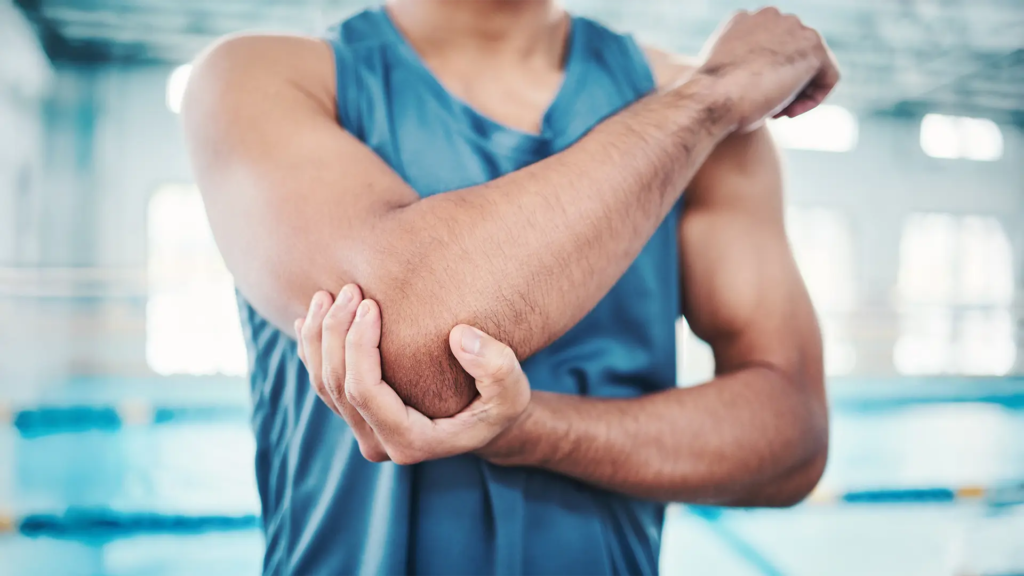
A persistent and stabbing pain on the outer side of the elbow can be one of the worst things for anyone active. This pain can be the result of your padel serving, deadlifting, or even carrying your laptop bag in the DIFC. The first thing you want to do is take care of the pain in your arm. Most people seek immediate relief locally by purchasing compression straps, applying anti-inflammatory ointment, and taking a temporary break from their workouts. However, advanced tennis elbow treatment Dubai specialists implement has revealed that the best and most effective solutions are achieved with a much wider view, looking far beyond the symptomatic elbow joint.
Everything in the body is structurally interconnected; when you utilize your arm, the force does not just originate in your hand; it travels up through your shoulder, down your spine, and straight into your pelvis. This is exactly how the kinetic cylinder system works. If the foundation, or the central core part of your body, is weak or unstable, the smaller mechanical components at the very end of the chain – in this case, your arm muscles – will over-exert themselves and eventually sustain painful micro-tears.
The Closed Kinetic Loop: Core Foundation vs. Distal Strain
There is also the critical question of how your body naturally chooses to manage its dynamic internal pressure. To understand this mechanism, you need to look directly at your pelvic floor. The pelvic floor is located at the very base of the abdomen and is intimately connected to several complex muscular structures. It works seamlessly in tandem with the diaphragm and the deep stabilizers of the abdomen to control internal pressure, distribute weight, and regulate mechanical strain across your entire torso.
The table below highlights the vast functional difference between a traditional, localized, symptom-oriented treatment and a modern, integrated, whole-body stabilizing treatment:
| Treatment Focus | Localized Elbow Management | Integrated Core & Pelvic Stabilization |
| Primary Target | Repetitive friction and local tendon swelling. | Intrinsic core pressure, pelvic leveling, and spinal stability. |
| Force Distribution | Localized to the wrist extensors, leading to rapid fatigue. | Transferred safely across the large muscles of the torso and hips. |
| Spinal Alignment | Left unaddressed, allowing posture shifts to continue. | Actively balanced to keep the shoulder blades level and secure. |
| Long-Term Outcome | Recurrent flare-ups as soon as training volume increases. | Permanent mechanical relief and balanced, full-body power. |
The Biomechanical Pathway: Pelvic Stability and Protection of the Arm
If your pelvic floor and the deep stabilizers of your abdomen function poorly and do not contract with proper coordination, your pelvis will naturally tilt, and your lower back will arch or flatten excessively. This baseline alteration in your posture will be transmitted directly upward through the spine, inevitably leading the upper back to round forward and causing the shoulders to roll inward.
Shoulders that are rounded forward will instantly shift the resting position of the shoulder blade (scapula) against your rib cage. Because the scapula serves as the primary mechanical anchor of the entire arm, the baseline stability of the shoulder blade directly determines how hard the wrist extensors will have to work to stabilize your hand during even the most basic of daily tasks. This compensatory pattern is most evident in individuals who are currently undergoing targeted scoliosis treatment, or those managing chronic structural imbalances of the spine. This is due to the fact that any lateral curvature of the spine will naturally pull the shoulders and pelvis into an asymmetrical, compensatory posture.
A weak central core cylinder always means an inefficient, broken transfer of force from your legs up to your hands. Incorporating targeted pelvic floor physiotherapy into your routine adds the necessary pelvic stability required to maintain an upright spine and an open shoulder girdle, which systematically reduces excessive, destructive mechanical tension on your forearm tendons.
The Comprehensive Recovery Pillars for Lasting Relief
If you truly want to make sure that your elbow heals and you don’t have to deal with the irritating cycle of re-injury, the first of three phases of rehabilitation demands the most focus.
- Dynamic Deep Core and Pelvic Floor Co-Contraction: Proper rehabilitation begins with the brain and the re-learning of the co-activation of the pelvic floor during breathing and upper extremity movements. This synchronized contraction provides an immediate anchor of stability to the pelvis and the lower spine. With this baseline secure, the shoulder girdle can now be correctly used to maintain the arm’s position during heavy activities, effectively eliminating excessive, localized loading to the vulnerable forearm tendons.
- Kinetic Chain Realignment and Scapula Anchoring: Once proper stabilization of the pelvic foundation is achieved, the therapist can safely focus on improving overall upper body posture. This structural correction is achieved by targeted strengthening of the middle trapezius, rhomboids, and serratus anterior muscles. Proper placement of the shoulder girdle permits an open, healthy chest posture and dramatically reduces the compression placed on the sensitive blood vessels and nerve structures traveling down the arm. This realignment of the upper body focuses on a symmetrical weight distribution – a core biological principle heavily utilized in advanced scoliosis treatment in Dubai to unload chronically stressed limbs.
- Targeted Tendon Loading and Progressive Resistance: Rebuilding the structural integrity of the forearm tendon cannot occur successfully in isolation. It must wait until the shoulder blade and core are supporting the body’s movements appropriately. Specialized tennis elbow physiotherapy programs include slow and heavy eccentric loading (the lowering of weights in a highly controlled manner) to provide a powerful cellular stimulus to the frayed collagen fibers in the tendon to begin healing and reorganizing. This technique is termed progressive resistance because it involves the gradual, systematic increase in the load-bearing capability of the tendon tissue, ensuring it grows strong enough to withstand the explosive nature of serving and heavy lifting.
If your chronic outer elbow pain remains highly persistent, severe, and completely unresponsive to integrated, conservative methods of physical treatment, an expert diagnostic assessment by a qualified orthopedic surgeon in Dubai is warranted to check for advanced structural degeneration or deep physical lacerations within the tendon.
Restoring Symmetrical Strength
The ultimate goal of modern rehabilitation is to improve the functioning of the body as a complete, fluid, and highly integrated unit, rather than treating it like a random collection of isolated parts. The human body is a beautifully connected network of joints, muscles, and complex fascial tissue. Attempting to permanently resolve a chronic forearm strain while ignoring the structural alignment and stability of your core and spine will invariably lead to a continuous cycle of frustration and re-injury.
Focusing heavily on the true mechanical balance of the entire body will rapidly enhance your quality of life, creating greater limb mobility, balanced power, and sustainable physical strength. Address your alignment today, and rebuild a resilient body that is ready to perform without limits.