



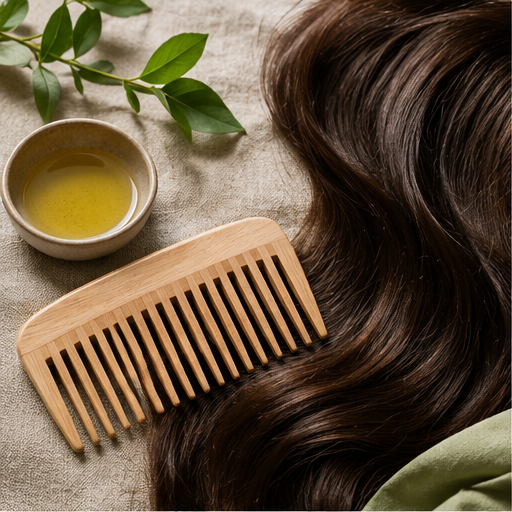
Most haircare conversations happen in the bathroom, where the bottles are lined up and the routine feels deliberate. Yet hair spends far more time outside the shower than inside it. It brushes against coat collars, catches beneath handbag straps, rests on pillowcases and moves under hats. These everyday encounters rarely attract the same attention as shampoo ingredients, even though they influence tangling, surface smoothness and the way a style holds up by evening.
The word “friction” sounds technical, but the idea is familiar. Rub two fabrics together and they can catch; slide a smooth material against another and they may move more easily. Hair fibres also have surfaces that meet other surfaces, particularly when strands are dry, weathered or tightly intertwined. Understanding those contact points offers a practical way to build a gentler routine.
The Coat-Collar Problem
Longer hair frequently sits exactly where a jacket, hoodie or scarf meets the neck. As you walk, turn your head or shoulder a bag, the same strands rub repeatedly against the fabric. By the end of the day, the nape may contain knots that were not there in the morning.
You do not need to stop wearing your favourite coat. Try a loose braid, tuck the lengths inside a smooth scarf or move them to one side before lifting a heavy bag. If the hair tends to knot in one specific area, check what touches that area during a typical day. The most useful adjustment may be a hairstyle rather than a new product.
When untangling the nape, work slowly. Hold the section near the roots so you do not pull on the scalp, then release the knot from the ends upwards. Tugging harder usually makes the experience worse.
What Happens Under a Shoulder Strap?
Bags create an especially overlooked point of contact. When loose hair lies beneath a strap, each movement can trap and drag a small section. The issue becomes more noticeable with textured fabrics, long commutes and repeated changes of shoulder.
Before putting on a rucksack or cross-body bag, move your hair clear of the strap. It takes only a second, and it is easier than freeing caught strands later. If you regularly switch sides, a low braid may be the simplest solution.
Similarly, office chairs and car headrests can catch hair at the back of the neck. There is no need to become anxious about every surface. The goal is simply to notice repeated snagging and make the next encounter easier.
The Pillowcase Conversation
Silk and satin pillowcases are often marketed as though they guarantee perfect hair. Reality is more individual. Fabric texture, weave, your sleeping position, hairstyle and hair type all influence how strands look in the morning. A smoother pillowcase may feel pleasant and reduce some snagging for certain people, but it is not a medical intervention or a universal answer to shedding.
If you are curious, begin with what you already own. Is the pillowcase rough, heavily textured or due for washing? Does hair catch around the fastening? Could you wear a loose sleep braid or use a comfortable bonnet designed for your texture? Test practical changes before buying premium accessories.
Comfort matters too. An accessory that slips off or feels uncomfortably tight will not become a sustainable habit simply because it is trending online.
Hair Ties: The Difference Between Secure and Tight
A hairstyle should remain in place without making your scalp feel as though it is being pulled. Repeated tension can be uncomfortable, and a tight elastic can snag strands when removed. Consider smooth, covered ties and clips that hold without sharp edges.
Change the position of your everyday ponytail occasionally rather than securing it at the exact same point each day. For exercise, choose a style that keeps hair safely out of the way but can be released without yanking. When removing an elastic, unwind it instead of dragging it down the entire length.
If a hairstyle causes persistent discomfort, that is useful feedback. You can adjust it immediately rather than waiting for wash day.
Wet Hair Needs a Different Kind of Handling
Wet strands often stretch and tangle differently from dry strands. That makes the moments after washing particularly important. Blot or gently squeeze away water instead of rubbing vigorously. If you use a towel wrap, keep it secure but not painfully tight.
Different textures detangle best under different conditions. Curly or coily hair may be easier to work through while conditioned; fine straight hair may respond better to a slightly different method. Whatever the texture, use a tool with appropriate spacing and start at the ends.
A good cleansing foundation can make subsequent handling simpler. Some people prefer botanical formulations such as a hair loss shampoo for their wash routine, but reducing friction is chiefly about technique and daily habits, not expecting a cleanser to solve every styling challenge.
Heat Styling Is Also a Contact Decision
Heat styling is not just about temperature; it involves contact time, repeated passes and how tightly strands are pulled through a tool. If you use straighteners or curling tools, follow their instructions, work with suitable settings and avoid repeatedly treating the same small section without a reason.
For blow-drying, keep the nozzle moving and use a brush that glides without catching. Take breaks if a section becomes tangled rather than trying to force the tool through it. Heat protection products can be a useful cosmetic part of a styling routine when used as directed, but none should be treated as permission to ignore basic technique.
Air-drying is an option, not a competition. The best method is one that fits your hair texture, schedule and comfort while avoiding unnecessary roughness.
Brushing: More Passes Are Not Always Better
The familiar advice to brush hair a set number of times every night has more to do with beauty folklore than a universal need. Brushing can detangle and distribute existing oils along some hair types, but excessive passes may create extra friction and disturb styles that do not require brushing.
Use a brush appropriate for your hair and its current condition. Clean hair from the bristles regularly, and wash tools when product residue accumulates. If brushing creates repeated snapping sounds or discomfort, adjust the method rather than increasing pressure.
For curls, fingers or a wide-tooth comb may be preferable to dry brushing. For sleek styles, a soft brush may be useful. There is no single perfect tool for everyone.
The Workday Friction Audit
Imagine the average weekday from morning to night. You brush your hair, pull a jumper over your head, secure a bag, sit in a car, remove a scarf, tuck hair behind your ears and change into exercise clothes. That is a long list of contact points before you have even considered washing.
Pick one day and notice the moment your hair first becomes tangled or uncomfortable. Is it after a windy walk? After wearing a lanyard? When taking off a wool jumper? A specific observation gives you something useful to test.
Keep changes small. Move your hair clear of a strap, swap an uncomfortable clip or try a different loose style for a few days. If the problem disappears, you have learnt something about your habits without buying a shelf of products.
A Balanced Place for Herbal Haircare
Traditional botanical haircare can be part of a considered grooming routine. For readers interested in that approach, hair growth products offer examples of scalp and hair products informed by Chinese herbal traditions. Such products sit alongside, rather than replace, the practical matter of how hair is handled each day.
That distinction is important. A beautifully formulated shampoo cannot prevent a bag strap from catching loose hair, just as a smooth pillowcase cannot compensate for constantly pulling through tight knots. Products and habits play different roles, and a comfortable routine gives each its proper place.
Build Your Own Low-Friction Toolkit
You probably need fewer items than you imagine. A suitable comb or brush, a comfortable hair tie, a soft drying towel and one workable protective style are useful foundations. Keep a spare tie in a bag if you often encounter wind. If your hair is long, learn one braid you can do quickly without a mirror.
During the next week, pay attention to how easily you can remove clips, unravel styles and detangle after washing. Make notes about comfort rather than chasing perfection. Some knots are simply part of living with hair, especially in unpredictable weather.
That is enough to start.
The Takeaway
Haircare happens on coat collars, pillowcases, bag straps and during busy commutes as much as it happens in the shower. Reducing unnecessary friction is an exercise in awareness: notice where strands catch, choose gentler handling and make small, realistic adjustments. The aim is not untouched hair, but hair that is easier and more comfortable to live with.
HERBAL HAIR | GUEST ARTICLE