



In today’s digital age, privacy and security online are more important than ever. One way to protect your online presence and maintain anonymity is through the use of an anonymous proxy. This tool helps mask your IP address, ensuring that your internet activities remain hidden from third parties. In this article, we will explore what an anonymous proxy is, how it works, its benefits, and its use cases.
What is an Anonymous Proxy?
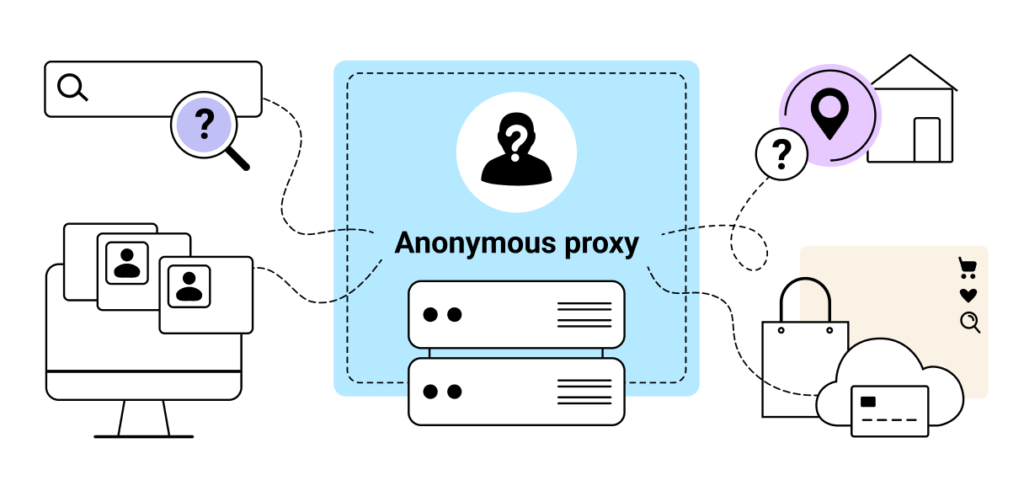
An anonymous proxy is a server that acts as an intermediary between your device and the websites you visit. When you use an anonymous proxy, your internet traffic is routed through the proxy server, which hides your real IP address. This means that the websites you visit only see the proxy server’s IP address instead of yours. This helps to protect your identity and keep your online actions private.
How Does an Anonymous Proxy Work?
The process of using an anonymous proxy is simple. When you access a website, your device sends a request to the proxy server instead of directly communicating with the website’s server. The proxy server then forwards your request to the website and retrieves the necessary data. Once the website responds, the proxy sends the information back to your device.
This process ensures that your real IP address remains hidden, and the website only knows the proxy server’s IP address. By doing this, your online activity remains private, and your identity is masked.
Benefits of Using an Anonymous Proxy
1. Privacy Protection
The primary benefit of using an anonymous proxy is the protection of your privacy. By masking your IP address, the proxy prevents websites, advertisers, and even hackers from tracking your online activity. This is especially valuable for users who are concerned about their digital footprint.
2. Access Restricted Content
Many websites restrict access based on geographical location. By using an anonymous proxy, you can bypass these restrictions by masking your real location with an IP address from a different region or country. This allows you to access content that might be otherwise unavailable in your region.
3. Enhanced Security
An anonymous proxy helps protect your device from cyber threats such as hacking attempts or malware. By hiding your IP address, it becomes harder for malicious actors to target you directly. Additionally, using a proxy can provide an extra layer of security when browsing on public Wi-Fi networks.
4. Preventing Tracking
Websites and advertisers track users using their IP addresses and cookies. An anonymous proxy helps to prevent this tracking by concealing your IP address and clearing or blocking cookies. This ensures that your browsing activity is not used to build a profile of you for advertising purposes.
Types of Anonymous Proxies
1. Transparent Proxy
A transparent proxy does not hide your IP address completely. It still sends your real IP address to the website, but it can filter content, block access to certain sites, or log your browsing activities. While it offers some protection, it is not entirely anonymous.
2. Elite Proxy
An elite proxy, also known as a high anonymity proxy, provides the highest level of privacy. It does not reveal any information about the user’s IP address and does not identify itself as a proxy server to the websites you visit. This type of proxy is ideal for users who want to remain completely anonymous.
3. Anonymous Proxy
An anonymous proxy provides some degree of anonymity by hiding your real IP address, but it may still reveal that the request is coming through a proxy server. While not as private as an elite proxy, it still offers more anonymity than a transparent proxy.
Use Cases of an Anonymous Proxy
1. Online Privacy
One of the most common uses for an anonymous proxy is to protect online privacy. Many people use proxies to ensure their browsing activities remain private, especially when visiting websites that require sensitive information such as online banking sites.
2. Bypass Geographical Restrictions
If you’re traveling abroad or live in a country with strict internet censorship, an anonymous proxy can help you bypass these geographical restrictions. You can use a proxy server located in another country to access websites that are blocked or restricted in your location.
3. Secure Online Shopping
When making purchases online, it’s essential to protect your personal information. An anonymous proxy helps ensure that your real IP address is not exposed to potential hackers or fraudulent websites. This added layer of security helps protect your financial information and online transactions.
4. Preventing Web Scraping
Businesses and websites often use proxies to prevent competitors or malicious actors from scraping their data. By hiding their IP address, they can access public information without revealing their identity.
Anonymous Proxy vs. VPN: What’s the Difference?
While both anonymous proxies and VPNs (Virtual Private Networks) help protect privacy online, they work in slightly different ways:
- Anonymous Proxy: A proxy server only routes traffic for specific applications, such as your web browser. It does not protect other online activities, like email or instant messaging.
- VPN: A VPN encrypts all internet traffic on your device, protecting all your online activities across all applications. It routes your traffic through a secure server, ensuring complete privacy.
While a VPN offers more comprehensive security and privacy, an anonymous proxy may still be sufficient for users who only need to mask their IP address for specific tasks.
How to Choose the Right Anonymous Proxy?
When selecting an anonymous proxy, consider the following factors:
- Anonymity Level: Choose an elite proxy if complete anonymity is essential.
- Speed: Proxies can slow down your connection. Select a proxy with high-speed servers if you require fast browsing.
- Location: If you need to access content from specific regions, choose a proxy server located in that area.
- Reliability: Ensure that the proxy service is reliable and can handle high traffic without downtime.
Conclusion
An anonymous proxy is an essential tool for anyone who values privacy, security, and freedom on the internet. By masking your IP address, it helps prevent tracking, bypass content restrictions, and keep your personal information safe. While there are various types of proxies available, it’s essential to choose the right one based on your needs for privacy and anonymity.
Whether you’re concerned about protecting your online activity, accessing restricted content, or enhancing your security, using an anonymous proxy can significantly improve your internet experience.
FAQs
1. What is an anonymous proxy?
An anonymous proxy is a server that routes your internet traffic through a different IP address, masking your real IP and providing anonymity when browsing the web.
2. Is an anonymous proxy completely secure?
While an anonymous proxy helps hide your IP address and provides some privacy, it does not encrypt your traffic. For complete security, a VPN is recommended.
3. Can an anonymous proxy bypass geographic restrictions?
Yes, an anonymous proxy can help you access content that is geographically restricted by masking your location and making it appear as though you are browsing from a different country.
4. Do anonymous proxies slow down internet speed?
Yes, using a proxy can result in slower internet speeds due to the extra step of routing traffic through a different server. However, premium proxies tend to have faster speeds.
5. What is the difference between an anonymous proxy and a VPN?
An anonymous proxy only hides your IP address for specific applications, while a VPN encrypts all your internet traffic and protects your online activities across all applications.