



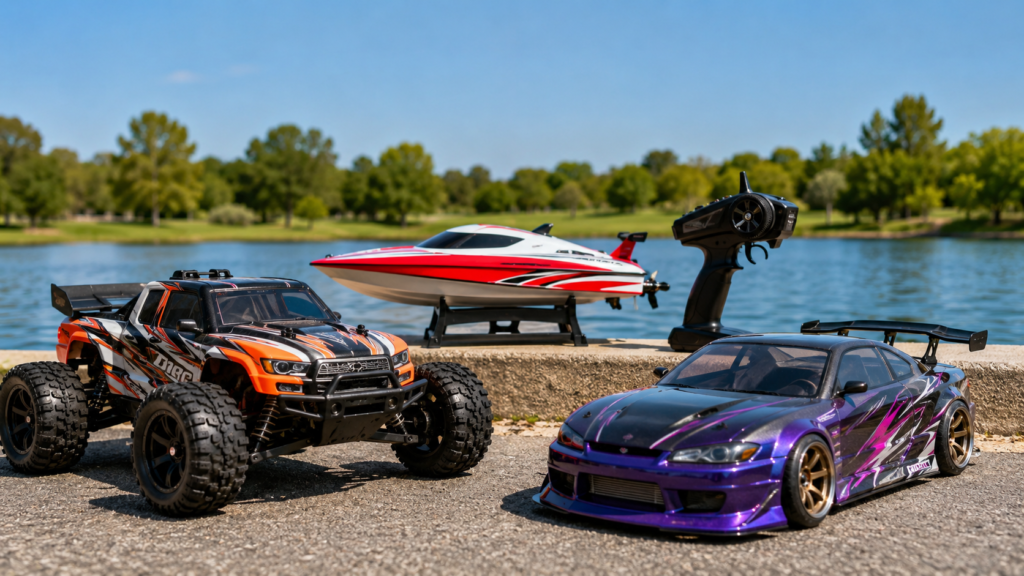
Remote-controlled vehicles have become much more than simple toys. They offer an enjoyable hobby for beginners, experienced enthusiasts, and anyone who enjoys speed, technology, and hands-on activities. From racing across a driveway to controlling a fast boat on a lake, the RC hobby gives users plenty of ways to have fun while learning how different vehicles work.
Choosing the right model, however, can sometimes feel confusing. There are different types, power systems, designs, and performance levels to consider. Understanding the main differences can make the buying process much easier.
Understanding the RC Hobby
The RC hobby covers a wide range of vehicles. Some are designed for smooth roads, while others are built for rough outdoor surfaces. Boats provide a completely different experience, and drift models focus on controlled sliding rather than simply reaching the highest speed.
For a new hobbyist, the best choice usually depends on where the vehicle will be used and what type of experience the person wants. Someone who enjoys outdoor water activities may prefer a remote control boat, while another enthusiast may want a fast ground vehicle for racing.
The important point is that there is no single model that suits everyone. The right option depends on personal interests, available space, maintenance expectations, and budget.
Choosing an RC Car for Everyday Fun
An rc car is often one of the easiest ways to enter the hobby. These vehicles can be used in suitable driveways, parks, tracks, and other open areas where operation is permitted.
Electric models are particularly popular because they are generally convenient to operate. Instead of dealing with fuel, users can focus on charging the battery, checking the vehicle, and getting behind the controller.
When selecting a model, speed should not be the only consideration. Beginners may benefit from a vehicle that is easy to control and stable at moderate speeds. A very fast model can be exciting, but excessive power can also make steering and braking more difficult for someone who is still learning.
Durability is another important factor. Outdoor surfaces can contain stones, dirt, grass, and small obstacles. A well-built model with suitable suspension and strong components can provide a better experience when used regularly.
Why Electric Models Appeal to Beginners
Electric RC vehicles have several practical advantages. They are usually straightforward to start, and there is less preparation involved before a session. Once the battery is appropriately charged, the user can generally connect it and begin driving.
Battery capacity also influences how long a session can last. A higher-capacity battery may provide more running time, although the exact duration depends on the vehicle, driving style, terrain, and battery specification.
It is also useful to understand charging requirements. Batteries should be charged using the correct charger and handled according to the manufacturer’s instructions. Proper storage and care can help preserve battery performance over time.
Exploring RC Boats on Open Water
For people who enjoy being near lakes or suitable waterways, an RC boat offers a completely different type of experience. Instead of navigating roads or trails, the user controls the model across the water while managing direction and speed.
Water conditions can make a major difference. Calm water is generally easier for beginners because the vehicle can be observed more clearly and controlled with greater confidence. Wind, waves, floating debris, and changing visibility can all affect performance.
A suitable location should always be selected carefully. The operator needs enough open space to control the boat safely and should follow local rules regarding the use of powered or remote-controlled vessels.
Before launching, it is sensible to check the battery, controller, connections, and hull. A short inspection can help prevent avoidable problems once the model is on the water.
The Appeal of an RC Drift Car
Drifting introduces another side of the hobby. Instead of simply trying to drive as quickly as possible, the driver attempts to maintain controlled slides through turns.
An rc drift car is designed around this style of driving. Steering control, throttle management, balance, and surface conditions all influence how successfully a drift can be performed.
Smooth surfaces are often more suitable for learning because they allow the driver to understand how the vehicle reacts to steering and throttle changes. As experience improves, the user can experiment with different techniques and setups.
Drifting can also encourage enthusiasts to learn more about vehicle adjustments. Changes to tyres, suspension, weight distribution, and other components can affect handling. This makes the activity interesting for people who enjoy both driving and mechanical experimentation.
What to Consider Before Buying
The first consideration should be the intended environment. A model designed for roads may not be suitable for rough terrain, while a vehicle intended for water obviously requires an appropriate place to operate.
The second consideration is the user’s experience level. Beginners often benefit from simpler controls and manageable performance. Experienced hobbyists may prefer more advanced models that provide greater opportunities for adjustment and customisation.
Maintenance should also be considered. RC vehicles contain moving parts that can collect dust, dirt, sand, or moisture. Cleaning the vehicle after use and checking important components regularly can help maintain reliable operation.
Budget is another practical factor. The initial purchase price is only part of the overall cost. Batteries, chargers, replacement tyres, spare parts, tools, and other accessories may become relevant as the hobby develops.
Learning to Control an RC Vehicle
Good control comes with practice. A new user does not necessarily need to begin at maximum speed. Starting slowly allows the driver to become familiar with acceleration, braking, steering, and turning.
Short practice sessions can be especially useful. The driver can focus on one skill at a time, such as maintaining a straight line, making controlled turns, or stopping smoothly.
For drifting, throttle control becomes particularly important. Abrupt inputs can cause the vehicle to lose control, while smoother adjustments can make slides easier to manage.
The same principle applies to boats. Gentle steering and gradual acceleration can help beginners understand how the model responds to changes in direction and speed.
Keeping RC Vehicles in Good Condition
Regular maintenance can make the hobby more enjoyable and reduce unnecessary repairs. After each session, users should inspect the vehicle for visible damage, loose components, dirt, and other issues.
Ground vehicles may require cleaning around the wheels, suspension, and chassis. Boats need additional attention because water exposure can affect certain components if they are not properly protected.
Batteries should also receive appropriate care. They should not be treated casually or stored in unsuitable conditions. Following the battery manufacturer’s charging, storage, and handling recommendations is essential.
Keeping a few common spare parts available can also be helpful for regular hobbyists. Items such as tyres, connectors, body clips, or other model-specific components may eventually need replacement.
Finding the Right RC Experience
The best RC vehicle is ultimately the one that matches the user’s interests and environment. Someone who enjoys speed and road-based driving may naturally prefer a fast ground model. A person who likes water activities may find an RC boat more exciting, while someone fascinated by precision driving may enjoy learning the techniques behind drifting.
The hobby can also evolve over time. A beginner may start with a straightforward electric model and later become interested in upgrades, racing, drifting, or other specialised areas.
Final Thoughts
RC vehicles combine entertainment, technology, and practical skill in a way that can keep the hobby interesting for years. Cars, boats, and drift models each provide a different experience, so choosing between them should begin with the type of activity the user actually enjoys.
By considering the operating environment, experience level, maintenance requirements, performance, and long-term costs, enthusiasts can make a more informed decision. With the right model and regular practice, remote-controlled vehicles can become an engaging hobby rather than simply another gadget.