



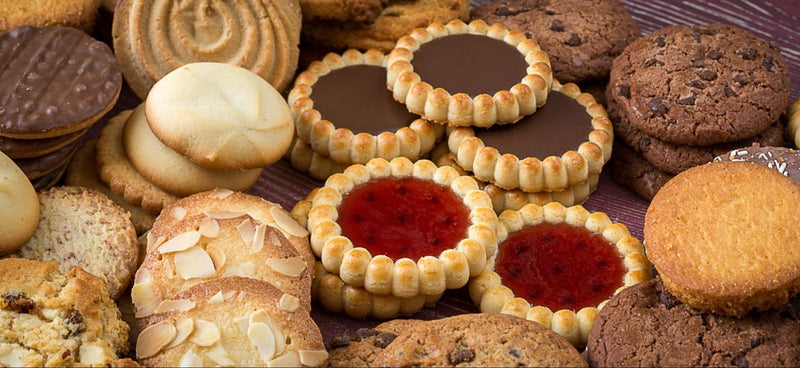
When it comes to sweet baked treats, few foods are as widely loved – or as widely misunderstood – as biscuits and cookies. Depending on where you’re from in the world, those two words can have very different meanings.
For British shoppers, a biscuit is typically something crunchy, dunkable, and ready to be munched with a cuppa. In America, a cookie will typically be soft, chunky, and often loaded with chocolate chips. And if you cast your eye a bit further afield – to France – you’ll find a totally different philosophy to the biscuit art, one of regional heritage and refined taste.
But they are more than simply linguistic quirks. The difference between biscuits and cookies is the result of richer cultural and gastronomic values, driven by texture, ingredients, rituals, and geography. And as UK shoppers increasingly discover international snacks through online food shopping, those differences add a new intensity of enjoyment to every bite.
A Tale of Two Meanings
The most significant transatlantic difference in cookie and biscuit usage is that, in the UK, biscuit refers to a small, crunchy baked item – sweet or savoury – ranging from luxurious shortbread to plain digestives. On the other side of the water in the US, a biscuit is something else: a soft, flaky, savoury bread typically served warm, which is not dissimilar to a scone.
What Americans refer to as a cookie is closer to what the British would describe as a soft bake or chocolate chip biscuit – thicker, chewier, and overall more indulgent. According to a 2022 report by Statista, the average American consumed more than 19 pounds (8.6kg) of cookies per year, with chocolate chip remaining the most popular variety. UK biscuit preferences are, however, in the direction of plain, crunchy types like rich tea, malted milk, and ginger nuts, a completely different taste culture.
The language divide has real-life implications. For companies exporting baked goods, packaging must be changed to avoid confusion. A biscuit in a Parisian coffee shop, for instance, might have little in common with a biscuit on a London shelf – or a cookie in a New York bakery.
It’s All in the Texture (and the Technique)
Apart from the nomenclature, the true difference between biscuits and cookies generally resides within texture. British biscuits are baked dry and crunchy, perfect to be dunked into tea. They rely on precise ratios of flour to fat, low water content, and occasionally a short baking time at high temperatures.
American cookies, however, aim for a combination of crunchy edges and soft interiors. They tend to use more butter, brown sugar, and leavening materials like baking soda. The result is a denser, richer cookie that’s usually eaten alone rather than with tea.
And then there’s France, and the category of biscuits there swings open in entirely different directions. French biscuits – galettes, sablés, palets bretons, and madeleines – fall to be categorized as being in between a British biscuit and a light cake.
It’s this attention to balance that imbues French biscuits with their unique character. They’re not overly sweet, nor do they seek to dominate. Instead, they offer an elegant, sophisticated snacking experience that’s meant to be shared with coffee, tea, or an afternoon break – le goûter, as they refer to it in France.
A Cultural Ritual
In Britain, biscuits are integrated into the daily routine – whether as part of elevenses at work, a tea break with friends, or something to nibble on after dinner. They’re part of a comforting routine that holds tradition and familiarity dear above everything else. The British biscuit tin filled with familiar favorites is a sign of national culture.
Cookies in the United States are more closely tied to indulgence times or celebration – baking with children, holiday cookies, or something that is had as dessert. Cookie has an emotional draw that is usually wrapped up in family tradition and sentimental remembrance.
The French are not so and are more refined in their snacking style. French biscuiterie is a tradition of subtle pride. Biscuits are a cut above snacks – craft foods with a regional heritage. Le goûter, that middle-of-afternoon snack especially enjoyed by children, is almost as much of a necessity as lunch or supper and often just a plain biscuit, a small piece of fruit, and a glass of milk. This snack of leisure is one shared by many adults as well deep into adulthood.
Over the past few decades, this ritualized snacking behavior has been increasingly popular in the UK, especially among consumers concerned with their health and in search of moderation over excess. French biscuits, with their less dense composition and smaller portion sizes, have captured a greater audience in Britain precisely because of this.
The Rise of International Biscuit Culture in the UK
As grocery shopping on the internet proves to be more trendy than ever before, UK families are now more open than ever to try new international food items – at least for as homey an item as a biscuit. During 2023, per YouGov, 36% of British customers had purchased a foreign snack product off the net, with foods from France and Italy being top favorite categories.
This openness has provided the potential for consumers to indulge in biscuit culture from all over the world without setting foot outside of their kitchen. French biscuits, for instance, are being embraced not as alternatives to British classics, but as additions that introduce diversity, sophistication, and often a cleaner ingredient list.
Why the Distinction Still Matters
Understanding the difference between cookies and biscuits is not merely a semantic nicety – it makes consumers more intelligent about what they enjoy and why. Cookies, whether devoured by the handful of a chocolate chip, in the hand of a rich tea biscuit, or in the delicate form of a French sablé, are participating in the world conversation about texture, tradition, and flavor.
As snack culture keeps changing, and more consumers focus on quality ingredients, regional authenticity, and conscious eating, the distinctions between cookies and biscuits will become increasingly blurred. But the origins matter. Understanding and valuing the differences enables us to enjoy the subtleties of each style – and perhaps learn something new along the way.
Conclusion
Call them biscuits, cookies, or biscuits secs – these small baked goodies deliver a powerful cultural punch. In Britain, they’re just part of daily life. In America, they’re a comfort icon. In France, they’re a low-key celebration of simplicity and taste.
No matter what your taste, there’s room in the biscuit tin – and on your plate – for them all. With greater availability through online supermarkets, UK consumers can taste this universe of baked pleasure bite by bite.
So whatever you’re restocking your stores with or taking a chance on, remember this: every biscuit has an origin story to tell. And sometimes that starts in a Breton village bakery or a Yorkshire kitchen – but it ends right where it does: with the perfect pause for thought, the comforting cuppa, and a moment of well-being.