



Among interior designers, few pieces have gathered as much renewed attention in recent seasons as the entryway table. Once treated as a minor utility surface, it has evolved into a defining element of residential design, shaping first impressions and setting the visual grammar for the rest of the home. Industry publications, editorial stylists, and architects have all begun elevating this modest console into a considered statement of taste. The reason is straightforward. As open-plan layouts blur the boundaries between hallway, living room, and kitchen, the entryway table has become one of the last remaining thresholds where a home can declare its identity. Understanding the current thinking around this piece requires more than a shopping checklist. It demands a designer’s perspective on proportion, material honesty, and functional layering. This article draws from professional practice and current market trends to explain why the entryway table now sits at the intersection of aesthetics and daily ritual, and what defines the pieces experts consider worth owning.
The Rise of the Entryway as a Design Statement
The threshold of a home has always carried symbolic weight, but contemporary residential design has magnified its role. Where hallways were once treated as transitional pass-through spaces, designers today approach them as micro-rooms with their own atmosphere. A carefully chosen entryway table anchors this atmosphere, providing a horizontal plane that grounds the vertical architecture of a foyer. Trend forecasters at major furniture fairs, including Salone del Milano and High Point Market, have repeatedly highlighted the console as the anchor piece of the season. The reason lies in scale. As homes lean toward soft minimalism, a single well-proportioned entryway table can carry an entire room’s design story without competing with surrounding furniture. Its silhouette becomes the first sentence in the visual narrative a guest reads upon arrival.
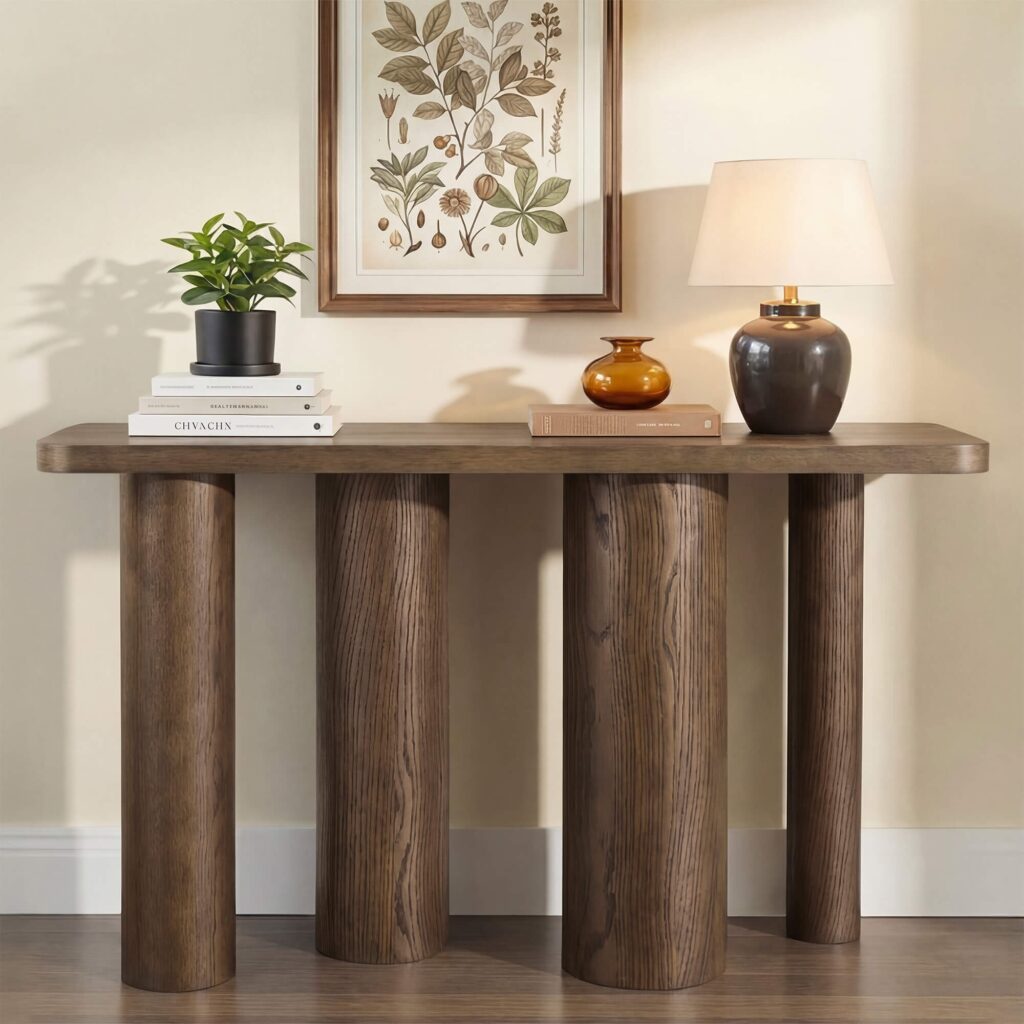
What makes this trend more than a passing preference is its alignment with broader lifestyle shifts. Remote work has increased the amount of time people spend inside their homes, which in turn has raised expectations for how those spaces perform emotionally. The entryway is now the daily transition point between public and private life. Designers argue that this transition deserves choreography, and the console is its stage. A generous top surface for keys, mail, and seasonal styling gives the piece practical purpose. A refined base gives it presence. Together, they turn a functional necessity into a small ceremony that begins and ends each day.
Material Trends Shaping the Category
If one theme dominates current console design, it is the return to authentic materials. Solid oak, walnut, and other honestly finished hardwoods have reclaimed the spotlight from high-gloss lacquer and thin veneer construction. This shift reflects a growing appetite for longevity, both practical and aesthetic. Furniture editors have noted that consumers now research grain patterns and joinery techniques with the same seriousness once reserved for kitchen appliances. Mid-century oak silhouettes, in particular, have surged in demand because they satisfy two desires at once. They provide the warmth of natural wood while retaining the clean geometry that modern interiors require. Brands that respect this balance, such as CHITA LIVING, have found their consoles referenced in mood boards and editorial features that shape the wider market.
Beyond wood, tactile contrast has become another marker of a well-designed console. Cane webbing, brushed brass hardware, and softly rounded corners are appearing more frequently in professional projects. These details resist the flatness that plagued earlier minimalist trends. They introduce hand and shadow, giving the eye texture to explore without overwhelming the room. Designers also point to sustainability as a quiet but powerful driver behind material choices. Solid wood pieces built with traditional joinery outlast their fashionable competitors, and buyers increasingly view that longevity as an ethical position rather than a nostalgic one. A console purchased today is expected to serve for decades, and its material honesty is what makes that promise credible.

Proportion, Placement, and the Language of Scale
Professionals often say that proportion is the invisible discipline behind every successful room, and nowhere is this truer than in an entryway. A console that is too shallow disappears against the wall and loses its authority. One that is too deep encroaches on circulation and undermines the sense of welcome a foyer should offer. The industry rule of thumb favors a piece long enough to fill roughly two-thirds of the available wall, with a depth that allows comfortable passage without visual crowding. Height matters equally. Designers typically look for a surface that aligns comfortably with the hand, encouraging the natural gesture of setting down keys or a folded coat.
Placement introduces another layer of expertise. A console placed directly opposite the front door reads as ceremonial and confident, ideal for homes with symmetrical architecture. A console placed along a side wall feels more casual and inviting, softening the arrival sequence. Mirror placement above the surface is a longstanding trick that professionals continue to endorse, because it expands the perceived volume of the space while providing a functional check before departure. Lighting completes the composition. A slim table lamp or a pair of sconces above the console transforms the surface into a small tableau that shifts with the time of day. When these elements are calibrated correctly, the entire entryway begins to feel curated rather than assembled.
Styling as an Evolving Discipline
Styling an entryway table is where trend and personality intersect. Editorial features have moved away from over-decorated surfaces filled with objects and toward restrained groupings that read as intentional. Three anchor items are usually enough. A sculptural vessel, a stack of books with a small object on top, and a single organic element such as a branch or ceramic bowl form a composition that photographs well and lives comfortably in daily use. The discipline here is subtraction. Designers routinely remove items rather than add them, trusting that empty space carries as much design weight as any object.
Seasonal rotation is another practice that industry stylists recommend. Swapping in different textiles, art prints, or ceramic pieces every few months keeps the entryway feeling considered rather than static. This aligns with the broader trend of treating the home as a living editorial rather than a fixed backdrop. The console becomes the easiest place to refresh a home’s mood without committing to larger renovations. In this sense, the entryway table is not just furniture. It is a small platform for ongoing design expression, one that rewards attention without demanding it.
A Piece That Sets the Tone for the Home
The renewed authority of the entryway table reflects a deeper conversation happening within interior design. Homes are being asked to carry more emotional and functional weight than ever, and the entryway is the first place that conversation begins. A well-chosen console does more than hold keys and mail. It signals intention, showcases material honesty, and invites daily rituals that ground the household. Designers agree that investing thoughtfully in this single piece often has a disproportionate impact on how a home feels, both to residents and to visitors. As trends continue to favor longevity, natural materials, and quiet confidence, the console will remain a bellwether for where residential design is heading. Choosing one is less about following a moment and more about aligning with an enduring principle: that the way we enter a space shapes the way we experience everything beyond it. That principle, more than any passing style, is what keeps the entryway table at the center of contemporary design.