



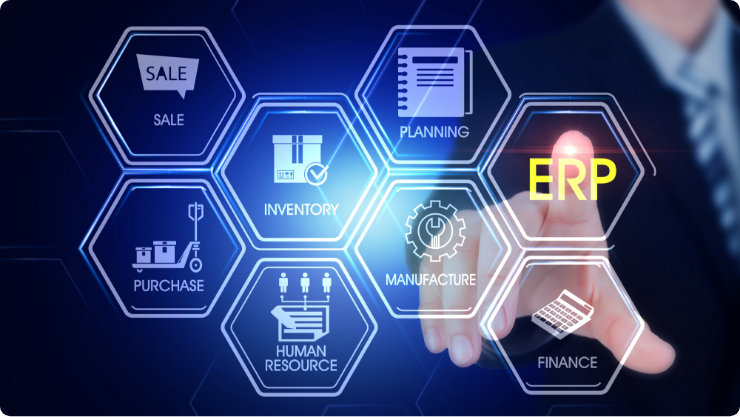
Sustained development and profitability in the ever-changing and competitive corporate sector of today depend on efficiency. Companies in many different industries are continuously looking for methods to simplify their operations, maximize the use of resources, and enhance their decision-making procedures. Using an integrated Enterprise Resource Planning (ERP) system is among the most effective instruments available in reaching these goals.
For a company, an ERP system functions as its central nervous system, combining under one platform to perform basic operations including finance, human resources, manufacturing, supply chain management, sales, and customer relationship management. This integration removes data silos, automates processes, and offers real-time visibility all over the company to improve corporate productivity.
Simplified Data Management and Silo Elimination
The capacity of an integrated enterprise resource planning erp solution system to centralize data management is a basic advantage. An ERP compiles data into one, consistent database rather than having important business information spread over several systems and spreadsheets. This solves the issue of data silos and prevents inconsistencies and mistakes.
Using an ERP, all pertinent information is instantly available and shareable among approved departments. By ensuring everyone runs with the same, consistent information, this centralized data management speeds reporting, increases data accuracy, and promotes improved cooperation and decision-making.
Real-Time Viewpoint and Enhanced Decision-Making
An ERP system’s integrated design offers real-time access to important company KPIs and performance indicators throughout all functional domains. With thorough dashboards, managers and executives can access up-to-date data on sales, inventory levels, financial performance, customer interactions, and supply chain activity.
Through accurate and current information, this real-time visibility enables them to make better educated and timely judgments. With the insights an integrated ERP offers, one can identify future problems, seize new possibilities, and modify strategies ahead of time, therefore increasing strategic planning and operational execution efficiency.
Improved Departmental Cooperation and Interference
ERP solutions promote improved cooperation and communication across several departments of a company by dismantling data silos and unifying business operations. Communication flows more smoothly and effectively when every department is using the same data and inside connected processes.
Sales staff, for instance, can view inventory levels in real time, which will help them to offer precise delivery schedules for their clients. Production can also be scheduled using real sales orders, therefore reducing excess or shortages. This better communication and cooperation avoid misunderstandings, simplify cross-functional operations, and finally increase overall corporate effectiveness.
Simplified Financial Reporting and Management
Reporting procedures and financial management are more simplified with an integrated enterprise resource planning erp solution system. ERPs simplify chores including ledger accounting, accounts payable and receivable, budgeting, and financial reporting by aggregating financial data from several sources into a single system. This automation speeds the financial closing process, increases accuracy, and lessens hand labor.
Moreover, ERP systems give strong reporting features that let companies create thorough financial statements and performance studies quickly and effectively. Better awareness of the financial situation of the organization thanks to this simplified financial management helps to guide wise financial decisions and support overall corporate effectiveness.
Improved customer relationship management
Many integrated ERP systems contain strong Customer Relationship Management (CRM) solutions that let companies handle their contacts with clients throughout the customer’s lifetime. CRM capability inside an ERP improves client-facing operations by centralizing customer data, recording interactions, and automating sales and marketing processes.
Comprehensive client data is available to sales teams so they can customize interactions and close deals more successfully. Marketing initiatives allow one to track and target more effectively. Improved access to client history and simplified problem-solving help to raise customer service standards. Better client satisfaction and more sales efficiency follow from this integrated CRM capability.
Finally, integrated ERP systems are strong instruments with many advantages for improving business efficiency in several functional domains. Using an integrated ERP system is a strategic need for companies seeking to reach and maintain long-term efficiency and success in today’s corporate climate.