




Have you watched an event fail because attendees could not reach the venue? Large scale events succeed or fail on transportation. It is the silent force that decides almost everything.
When done right, event transportation solutions go completely unnoticed.
- Attendees arrive on schedule
- They move between venues smoothly
- And depart without friction
But transportation becomes the story everyone remembers when it fails. Therefore, choosing the right event transport solutions is more critical than ever.
This guide covers the real challenges event planners face today. It also walks through the components and practices that separate smooth operations from chaotic ones.
Why Event Transportation Planning Has Become More Complex
Rising Attendee Expectations
Events should be easy to reach for attendees. They have simple requirements. They want:
- Clear directions
- Reliable transport
- Smooth navigation once they arrive
Most attendees prefer events close to where they live. This limits where planners can hold events.
Limited Venue Infrastructure
Most venues were not built for today’s event sizes. Curb space is limited, yet more vehicles need it every year. Loading zones fill up fast. Delays can quickly increase when hundreds of vehicles arrive at once.
Rising Costs
Travel and accommodation costs keep climbing. Planners must cut costs somewhere. Transportation is often where they look first.
Choosing the wrong event transportation solutions can waste money or create problems. The right approach saves money while keeping attendees happy.
Common Challenges in Large Scale Event Transportation
Every large event faces similar transportation challenges. Understanding them can help solve them early on.
Curb Space And Venue Access Constraints
Venues rarely have enough loading zones for peak arrival times. A stadium event can see thousands arrive within a narrow window.
That pressure on curb space creates bottlenecks. Those bottlenecks then ripple through the entire event schedule.
Coordinating Multiple Vehicle Types And Vendors
Large events usually don’t rely on one mode of transport.
- They choose a combination of:
- Shuttles
- Executive cars
- Rideshare zones
- Transit connections
Each vendor typically runs its own system. This makes a unified view of ground operations difficult to build.
Real-Time Schedule Disruptions
Many obstacles can ruin a perfectly planned event transportation. Weather can change routes. Traffic can cause delays. Even flight delays can change the entire schedule. It’s important to account for these challenges. Assuming ideal conditions sets a plan up to fail.
Communication Gaps Between Teams
Drivers, planners, and attendees often rely on different channels. Small delays turn into confusion when updates do not reach everyone. An attendee unaware of a fifteen minute delay may book a separate ride. That single decision can create a bigger problem elsewhere.
Budget Pressure Without Losing Quality
Rising travel and accommodation costs weigh heavily on event budgets. About 78% of planners cite these rising costs as a major concern. Another 67% report worries about flight delays and air travel reliability. Transportation planning must absorb this pressure without attendees noticing any drop in quality.
Core Components Of Effective Event Transportation Systems
Reliable event transportation systems share a few common building blocks. These hold true regardless of event size or industry.
- Fleet And Vendor Coordination
A strong system gives planners visibility across every vehicle involved.
- This includes
- Shuttles
- VIP cars
- Third party transport providers
Coordination means everyone works from the same operational picture. No vendor should operate as a blind spot in the plan.
- Real-Time Tracking And Dispatch
Live location data lets organizers see exactly where each vehicle sits. Small delays can then get addressed before they grow larger. Dispatch teams reroute vehicles around traffic when needed. They can also reassign drivers when demand changes unexpectedly.
- Attendee Communication And Booking
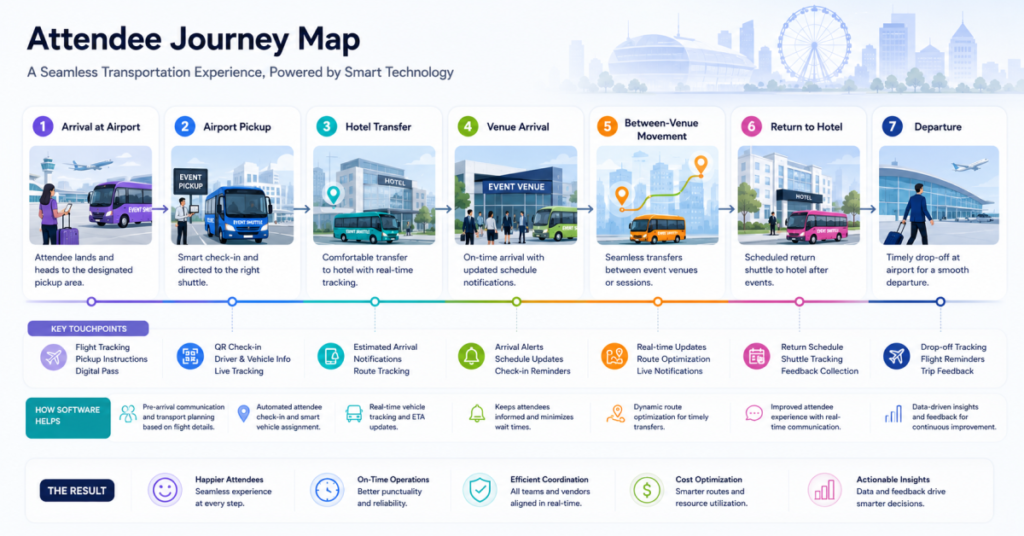
Attendees expect event transport to match consumer app convenience. Clear pickup instructions and live wait times reduce staff burden significantly. Self service booking also cuts down confusion at busy zones. It is easy for attendees to control their own schedule.
- Data Driven Capacity Planning
Strong systems predict demand instead of reacting to it. Registration data and session schedules show you when demand will spike. A keynote ending causes a sudden rush for shuttles. Position vehicles ahead of time to prevent long queues.
The Role Of Transportation Scheduling Software
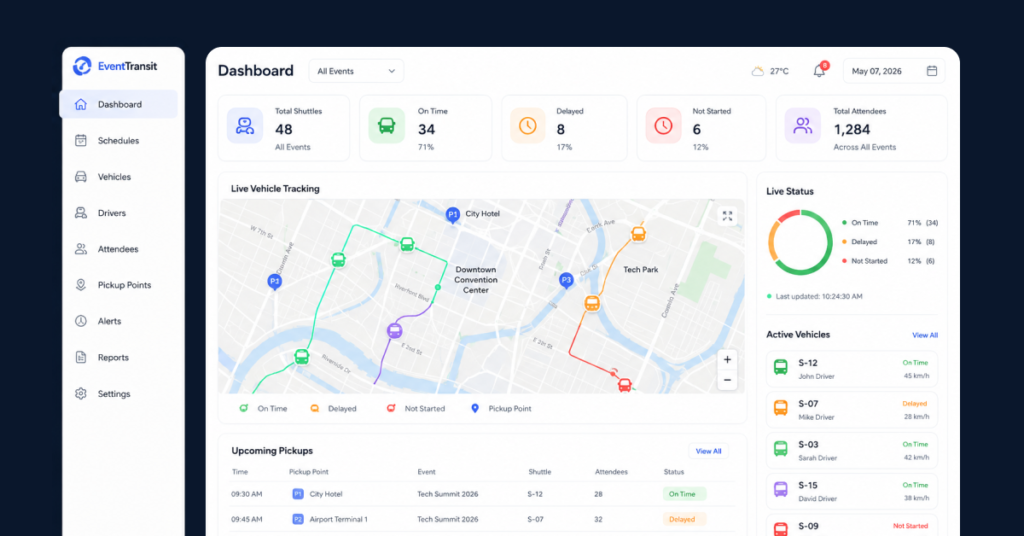
Manual coordination and spreadsheets cannot match the scale of modern events. This is where transportation scheduling software changes the equation entirely.
Scheduling software centralizes bookings and assigns vehicles based on demand. It also adjusts routes automatically as conditions change on site.
Instead of tracking forty shuttle runs on a whiteboard, the system handles assignment logic. It flags conflicts early and sends live updates to drivers and attendees together.
These are the key features worth evaluating in any platform:
- Read time: route optimization that adjusts for traffic and demand
- Automated attendee notifications for pickup times and delays
- Centralized dashboards showing every vehicle and vendor in one place
- Integration with event registration systems to forecast transportation demand
- Reporting tools that track on-time performance after the event
Planners who use a dedicated scheduling platform experience fewer last-minute challenges. They get a clear picture beforehand to manage it well.
Choosing The Right Event Transport Solutions For Your Event Type
Not every event needs the same transportation approach. The right event transport solutions depend heavily on attendees and event demands.
- Corporate Events Versus Public Events
Corporate event transportation typically prioritizes punctuality and discretion. They want to deliver a polished experience. Public events prioritize throughput and moving large crowds efficiently.
Both approaches require careful planning, though the priorities differ. A corporate program values consistency while a public event values volume.
- VIP And Executive Transport
Executive travel carries its own distinct requirements. Here, security and privacy matter more than raw volume. Consistent and seamless transportation makes all the difference. Organizations now work with fewer transportation partners. This makes it easier to control quality and keep executives happy.
- Shuttle And Group Transport For High Volume
Conferences and trade shows use shuttles to move attendees. They need a predictable schedule with a good frequency. Attendees need to know when the next shuttle comes. Reliable timing builds trust in your transportation.
How Do I Choose The Right Solution?
Real-World Examples
- Small Corporate Retreat (300 attendees)
A tech company held a one-day retreat at an off-site venue. They used employee carpools and three shuttle vans. Email coordination kept everything simple and costs low.
- Regional Conference (1500 attendees)
A marketing conference rented a dedicated shuttle fleet. Shuttles picked up attendees every 15 minutes on a set schedule. Attendees always knew when to expect their shuttle.
- Large Festival (8000 attendees)

A music festival used transportation software to manage shuttles. The system tracked vehicles in real time and sent automatic updates to attendees. Wait times dropped significantly compared to the previous year.
- Major Convention (25,000 attendees)
An international conference hired a full transportation provider with dedicated software. One centralized system managed airport pickups, hotel shuttles, venue transport, and executive cars. Real-time adjustments handled weather problems without delays.
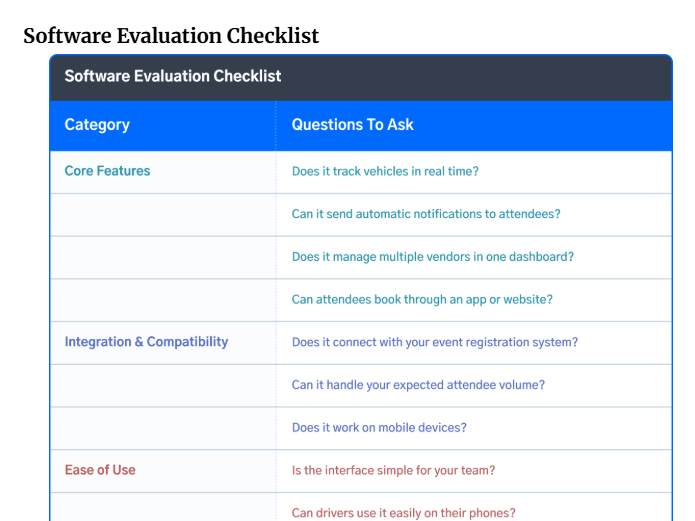
Software Evaluation Checklist
Best Practices For Implementing Event Transportation Systems
A few practices consistently separate smooth operations from chaotic ones.
- Start Planning Well In Advance
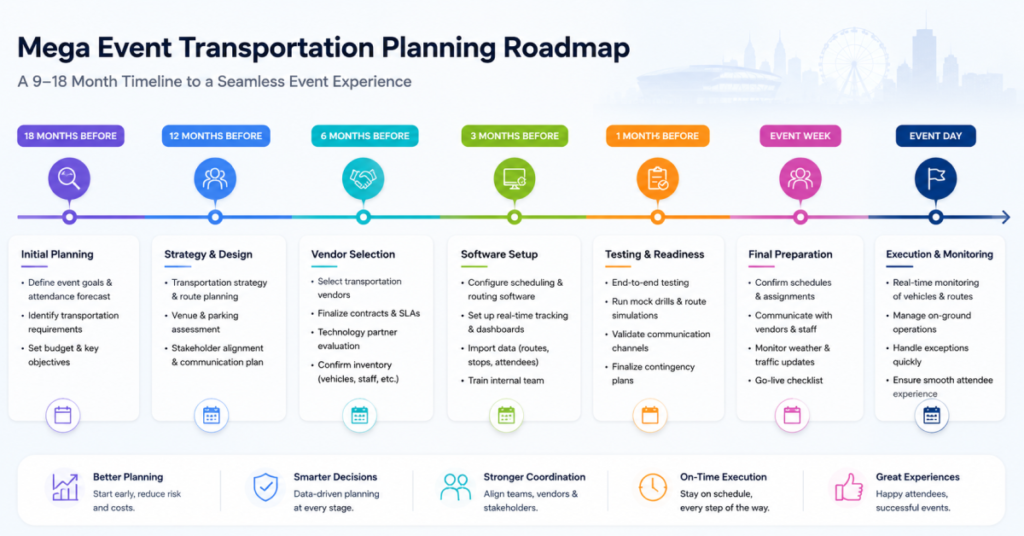
Mega events need nine to eighteen months of transportation planning. This includes getting permits and mapping traffic patterns carefully.
Smaller events benefit from early planning too. Starting months ahead works better than rushing in the final weeks.
- Set Realistic Performance Benchmarks
Corporate and VIP transport should arrive on time at least 95% of the time. Event shuttles should hit 90 to 95% on-time performance.
Clear benchmarks give your operations team a goal to work toward. Everyone knows what success looks like before the event starts.
- Build Contingency Plans Early
Weather delays and road closures happen often. They are normal parts of running any large event.
Plan for disruption before it occurs. Waiting until problems happen forces your team to react under pressure.
- Centralize Communication Across Teams
All stakeholders should get updates from one place. Drivers, attendees, and venue staff need the same information.
Broken communication causes most transportation problems. One shared source keeps everyone aligned.
- Test The System Before Event Day
Run a small test with a limited group first. This uncovers routing issues, signage problems, or dispatch mistakes early.
Fix problems before the actual event. Once the doors open, there is no time to make changes.
Future Trends In Event Transportation Solutions
The next generation of event transportation solutions follows a few clear directions.
- Centralized Transportation Management
Organizations are moving away from managing multiple vendors separately. Single, accountable partners now coordinate pickups, positioning, and adjustments together.
This consolidation reduces finger-pointing when something goes wrong. One team owns the outcome across the entire transportation program.
- Predictive Scheduling Powered By Data
Newer platforms use historical and real-time data together. They anticipate bottlenecks, such as post-keynote surges, before they occur.
Vehicles then get assigned proactively rather than reactively. This approach keeps queues shorter and wait times more predictable.
- Sustainability In Vehicle Choices
More organizers now factor emissions into transportation planning. Shared mobility options are gaining traction for large public events.
Vehicle volume carries a visible environmental footprint at scale. Addressing that footprint is becoming part of standard planning conversations.
Conclusion
Transportation is an important aspect of managing large events. It defines attendee experience from arrival through departure.
Smart event transportation solutions can help event planners deliver smoother events. Whether an event needs executive transport or high-volume shuttles, fundamentals stay consistent. Plan early and set clear benchmarks. Centralize all communication channels and prepare for disturbance.
Getting these fundamentals right turns transportation into a quiet strength. It stops being a risk and becomes a reliable part of the experience.
Frequently Asked Questions
Q. What features to look for in transportation software?
Ans. The transportation software must have a centralized vehicle management system. Look for features like real time tracking and automated notifications. Evaluate the security framework as well. Also, the software should integrate with your event registration system.
Q. How does scheduling software reduce transportation costs?
Ans. It eliminates manual coordination and prevents overbooking vehicles. The system optimizes routes and reduces fuel waste.
Q. Can the software handle multiple vendors at once?
Ans. Yes. Good software gives you visibility across all vendors in one dashboard. You see every vehicle and vendor together.
Q. How quickly can attendees book transportation through the software?
Ans. Most software lets attendees book in seconds through a mobile app or website. Self-service booking reduces staff burden significantly.
Q. Will the software work if things go wrong on event day?
Ans. Yes. It adjusts routes in real time based on traffic and sends updates automatically. Your team can reroute vehicles instantly.
Q. How to choose between different transportation software options?
Ans. You can primarily test how easy it is to use. Check if it integrates with your registration system and verify it handles your event size. Event planners should also ask for a demo before buying.