



Industrial logistics now operate within far tighter timelines than most facilities were originally designed to handle. Inventory turnover moves faster. Dispatch windows are narrower. Cargo scheduling leaves little room for operational hesitation. Under these conditions, equipment selection begins influencing workflow efficiency long before output figures are reviewed.
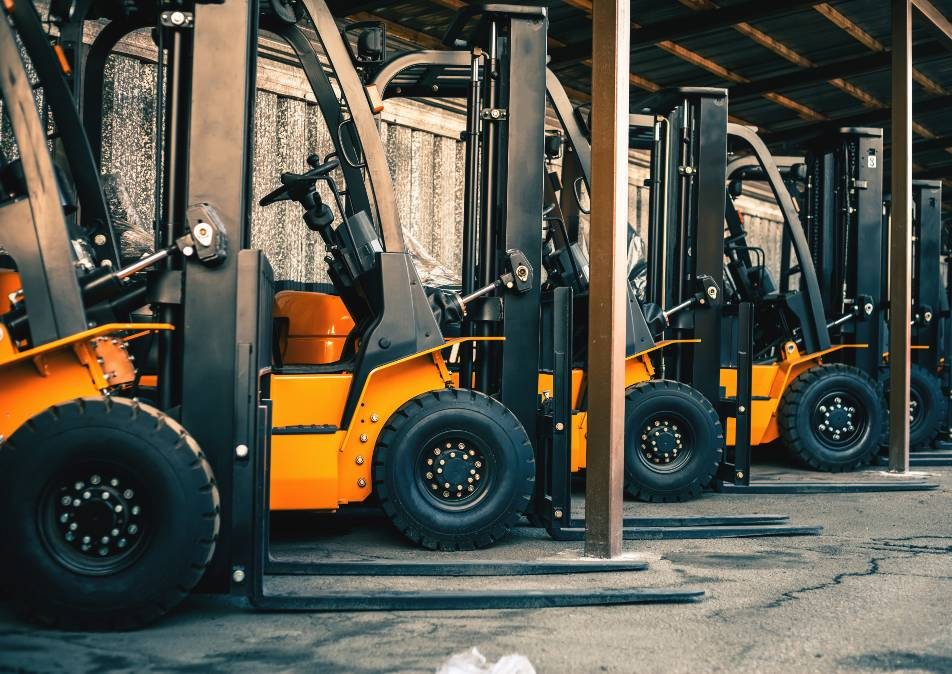
A forklift operating through continuous loading cycles is judged differently today than it was ten years ago. Fleet managers pay closer attention to steering response, fuel behaviour across extended shifts, operator visibility within dense storage layouts, and the amount of movement completed within a fixed timeframe. The conversation has become more operational than mechanical.
This broader change in industrial thinking has altered procurement standards across multiple sectors. Machinery is now evaluated through workload compatibility, servicing practicality, runtime stability, and long-term operational behaviour. Facilities expanding movement capacity or scaling distribution networks tend to prioritise equipment capable of maintaining performance steadily over time rather than machinery selected purely for specification value.
That approach is shaping equipment strategy across warehousing, shipping, construction, cargo handling, and large-scale distribution environments.
Why Forklift Performance Shapes Daily Operational Flow
Warehouse movement patterns have changed considerably in recent years. Storage systems are denser, dispatch activity is more compressed, and loading operations now move at a pace that places greater demand on handling equipment throughout the day.
Under these conditions, forklift selection goes beyond lifting capacity.
Transmission response shows up in how the machine behaves in tight aisles. The turning radius decides how easily it works through compact racks without constant correction or repositioning. Cabin layout and seating matter over long shifts, especially where pallet movement repeats across the day.
Fuel management also receives greater scrutiny now, especially within high-frequency logistics environments where fleets remain active for most of the working day. Small differences in runtime efficiency become commercially noticeable over longer operational periods.
The strongest-performing fleets are usually the ones aligned carefully with actual workload behaviour rather than theoretical maximum capacity.
Equipment Procurement Has Become More Technical
Industrial purchasing decisions once revolved heavily around acquisition cost and output specifications. The evaluation process today is considerably more layered.
Operators increasingly examine:
● servicing accessibility
● runtime efficiency
● fuel consumption trends
● environmental adaptability
● maintenance scheduling
● parts availability
● monitoring compatibility
The reason is straightforward. Equipment now functions inside highly interconnected operational systems where consistency carries measurable commercial value.
Facilities managing continuous cargo movement or high-volume distribution activity place particular importance on machinery capable of sustaining predictable performance across long service cycles. Stability across daily operation matters more than short-duration peak output.
That distinction influences nearly every major category of industrial equipment.
Marine Power Systems Are Being Evaluated Differently
Power continuity onboard commercial vessels carries operational significance well beyond basic electrical supply. Navigation systems, climate control infrastructure, refrigeration units, safety systems, and cargo support functions all rely on stable onboard generation across extended routes.
As a result, operators increasingly evaluate marine generator systems through long-term operational behaviour rather than isolated performance metrics.
Fuel efficiency under variable load conditions has become especially important within commercial shipping environments. Thermal management receives similar attention, particularly across vessels operating continuously through demanding maritime conditions. Monitoring systems capable of tracking lubrication behaviour, temperature patterns, and generator performance in real time are also becoming more widely integrated into fleet operations.
These developments have gradually shifted marine equipment planning toward greater precision and longer-term operational forecasting.
Material Movement Is Now Closely Linked to Facility Efficiency
The speed at which inventory moves through a facility increasingly shapes broader operational performance. Delays in transfer, loading, storage coordination, or dispatch preparation influence scheduling accuracy across the wider distribution chain.
This explains the growing investment in material handling equipment designed around operational continuity rather than basic movement capability alone.
Modern handling systems are expected to support sustained workload intensity while maintaining manoeuvrability, handling precision, and operator control across demanding environments. Facilities managing large-scale inventory movement also place greater emphasis on fleet coordination, equipment monitoring, and servicing efficiency than previous operational models required.
The objective is steady workflow continuity across storage, loading, transfer, and dispatch functions.
Operational pace matters. Particularly in sectors where distribution timelines continue tightening year after year.
Conclusion
A well-matched material handling equipment supports movement consistency without placing unnecessary strain on servicing schedules or operational planning. Power systems engineered for continuous-duty performance contribute to smoother route management and onboard stability.
Equipment designed with workload compatibility in mind generally integrates more effectively into expanding operational environments.
Across logistics, warehousing, marine transport, and industrial distribution sectors, that level of planning has become increasingly valuable within modern operational strategy.