



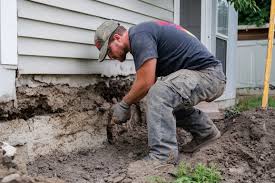
Homeownership in Austin goes beyond daily maintenance. Maybe the single biggest problem is the manner in which the local weather influences the integrity of a home’s foundation. Despite the booming culture and growing economy of the city, residents know all too well about the issues brought on by Austin’s climate. These problems directly impact whether or not a home’s foundation remains intact, or the development of indicators of stress.
Knowing why the weather affects foundation repair in Austin can enable homeowners to respond immediately, saving money and the structure long-term.
Austin’s Soil and Climate Combination
The ground that most houses in Austin are built upon is clay soil. This soil is highly sensitive to water. When rain falls on it, it swells, and when it dries up, it shrinks. The repeated cycle of swelling and shrinking stresses foundations, causing cracking, movement, and sloping floors.
Austin’s weather only adds to this dilemma. It has hot summers, stormy seasons, and occasional periods of drought. All these changes in weather compel the soil to react, and houses constructed on such terrain have to withstand these forces year in and year out.
Effects of Heavy Rain
Following prolonged periods of dryness, heavy rain can lead to extreme soil expansion. Water penetrates the ground, and the clay expands rapidly. The rapid transformation exerts upward pressure on a home’s foundation. Its consequences may involve crooked doors, floors that slope, or cracks that are evident in walls.
Moreover, inadequate drainage surrounding a building aggravates the issue. When rainwater pools around the property’s base instead of draining away, the foundation is exposed for extended periods. Gradually, this hastens the degradation and demands more expensive repairs.
Effect of Drought Conditions
While too much water is detrimental, too little also has devastating effects. The earth becomes smaller and separates from the foundation when it loses moisture. A house may become unstable as a result of voids being created beneath it. A building’s exterior and interior may be severely stressed if sections of it settle unevenly due to inadequate support.
In Austin, one can quite often have a very rainy season followed by weeks of hot dryness. This constant swing makes foundation problems more probable than in regions with steadier weather patterns.
Seasonal Temperature Swings
The behaviour of soil is also impacted by Austin’s temperature extremes. Drying is accelerated by hot summers, and moisture levels are altered by freezing temperatures in the winter. Even small variations can eventually contribute to a foundation’s deterioration, even though the city does not endure the harsh winters that northern states do.
Early Warning Signs for Homeowners
Early recognition of foundation issues is important. There are some seemingly minor signs that can indicate more extensive structural issues. Owners should be wary if they observe:
- Cracks appearing on walls or ceilings.
- Windows or doors that suddenly stick.
- Uneven floors or apparent slopes.
- Spaces are developing between the walls, ceiling or floor.
- Exterior brickwork is cracking or separating.
These issues often indicate soil movement beneath the home. Addressing them promptly is far less expensive than waiting until significant repairs are required.
Long-Term Costs of Delay
It’s tempting to ignore slight indications of foundation damage, but the price of delay is high. What started out as a small repair might turn into structural support, plumbing work, or even roof alignment issues. Homeowners also stand to lose property value, since apparent foundation damage devalues a house to potential buyers.
Energy costs might increase as well. Cracks produced by foundation shifting can interfere with insulation, letting air out and making heating or cooling systems work harder.
Why Local Expertise Matters
Foundation repair in Austin necessitates an awareness of both the soil structure and the climate conditions specific to the area. Local experts are aware of these problems and can offer custom solutions. One such business, Perma Pier, has worked with many homeowners in Austin and realises the effect of moving soil and volatile weather.
Asking for advice from experts within the location guarantees that whatever fixing is done is not only an ad hoc solution but a permanent one tailored to the region’s ecosystem.
Preventive Measures for Homeowners
Homeowners can reduce the risks, even though it is impossible to prevent every potential foundation issue. It’s critical that the house has adequate drainage. One simple and efficient way to protect a foundation is to monitor for leaks, clean gutters, and control soil moisture during dry spells.
Planting trees at a distance from the house is also necessary. Roots are capable of drawing water out of the ground, causing more shrinkage during dry periods. Careful management of landscaping helps homeowners prevent undue stress on the foundation.
Conclusion
Austin’s climate, which is typified by heavy rainfall, prolonged droughts, and temperature changes, favours the occurrence of foundation problems. The heavy clay soil in the city reacts forcefully to these changes, so rapid inspection and repair are critical in maintaining structural integrity.
Homeowners who react early when early warning signs appear can prevent small issues from growing into gigantic expenses. With professional intervention and preventive care, the foundations of Austin homes can stay solid in the midst of the city’s harsh weather.