



Introduction
Golf might look calm and easy to the untrained eye, but a powerful and accurate swing comes from strength, balance, and controlled movement. One of the most important parts of a strong golf swing is rotational strength. Rotational power is what allows golfers to turn their bodies quickly and efficiently while staying balanced. Training this type of strength helps golfers hit the ball farther, control their shots better, and reduce the risk of common injuries that come from repetitive swinging. Whether someone is a weekend golfer or aiming to compete at a higher level, understanding how to train the body for rotational force can make a big difference in performance. In this article, we will explain why rotational strength matters, how it improves golf performance, and how training can be built into a safe and effective plan. If you want to help others achieve stronger, smoother swings, becoming certified as a golf fitness professional is a great way to share this knowledge and skill. You can learn more through Golf Fitness Certification | ASFA.
What Is Rotational Strength and Why It Matters
Rotational strength refers to your body’s ability to twist and turn with power. In golf, the swing starts with your feet and legs, moves through your hips and torso, and ends with your arms and hands releasing through the ball. This whole sequence depends on how well you can rotate your body in a balanced and controlled way. Improving rotational strength means your body can produce more force with less effort and maintain rhythm throughout the swing.
Golfers with better rotational strength often:
- Generate more club head speed
- Maintain consistent swing mechanics
- Reduce strain on smaller muscles by sharing the work across the body
Training this type of strength helps the body work as a coordinated team rather than relying on arms or shoulders alone for power.
How Rotational Strength Improves the Golf Swing
A golf swing is not just about muscling the ball; it’s about timing and coordination. When a golfer turns well through the torso and hips, the energy travels up through the body naturally and efficiently. This makes the swing smoother and more powerful. Training rotational strength helps golfers:
- Rotate the hips and torso more effectively
- Stabilize the core so energy flows directly from the ground
- Improve balance so swings stay stable through impact
- Support the spine and reduce unnecessary stress
This combination leads to more distance off the tee and more accuracy across all types of shots.
Key Areas to Target in Rotational Training
Rotational strength is not just about turning harder. It is about turning well. Several areas of the body must work together to create a powerful yet controlled swing.
Core Muscles
Your core helps transfer force between the lower and upper body. Strong core muscles absorb impact and help keep you steady throughout the swing.
Hips and Glutes
The power for many golf swings starts in the hips. Strengthening these areas helps a golfer turn with purpose and stability.
Upper Back and Shoulders
A strong upper body supports follow‑through and helps maintain posture. When these muscles are conditioned well, the swing feels smoother and more controlled.
Working on these areas together builds the foundation for improved power and mechanics in the golf swing.
Types of Rotational Training Exercises
Rotational strength training should focus on controlled movements that mimic the motion of a golf swing. Some effective exercises include:
- Torso twists while holding a medicine ball or resistance band
- Russian twists with feet lifted or grounded
- Hip rotation drills in a half‑kneeling position
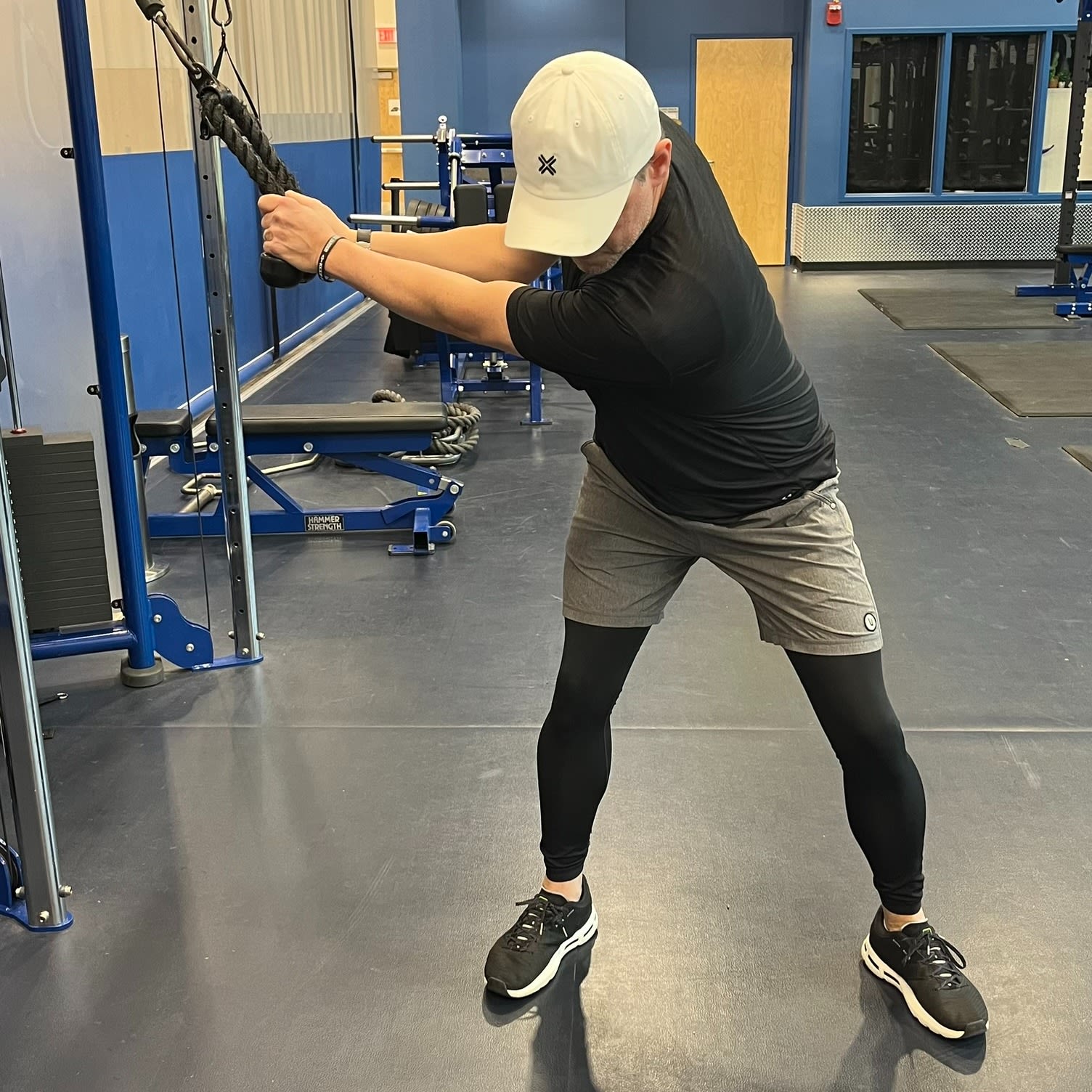
- Reverse chops with cables or bands to train the core
- Rotational lunges that turn the hips while keeping stable
These exercises train the muscles to work in the same way they do during a swing. They build strength and coordination, making the movement more powerful and efficient.
Beginners can start with lighter resistance or bodyweight exercises. More advanced golfers might use weighted movements or tools that increase resistance as strength improves.
Balance and Stability: The Unsung Heroes
A powerful swing is not just about turning. It also depends on staying balanced before, during, and after contact with the ball. Rotational strength training should always include balance work.
Balance drills help the body:
- Keep the spine neutral
- Maintain posture throughout the swing
- Control movement even under fatigue
Combining balance work with rotational strength exercises builds a golfer’s ability to stay stable, especially when executing longer or more powerful shots.
Flexibility and Mobility Support Rotation
Strength alone is not enough if the body cannot move through the necessary range of motion. Flexibility and mobility are essential partners to strength. When the body can move freely, rotational strength can be expressed fully and safely.
Working on flexibility in areas such as:
- Thoracic spine (upper back)
- Hips
- Shoulders
…helps reduce restrictions that limit movement. When these areas are mobile, rotational strength transfers directly into swing performance rather than being lost or blocked by tight muscles.
Reducing Injury Risk Through Proper Training
Golf is repetitive by nature, especially in the swing pattern. If a golfer relies too much on one area of the body, it can lead to overuse injuries. When rotational strength is developed properly, it helps:
- Distribute forces across muscles and joints
- Reduce strain on lower back and shoulders
- Improve posture throughout the swing
- Support recovery through balanced training
A strategic training plan teaches the body to work smarter, not just harder. This leads to better performance and reduces the risk of injury that comes from repetitive strain.
Building a Training Plan That Works
A well‑rounded training plan for rotational strength should include:
- Warm‑up movements that activate key muscles
- Strength sessions that focus on rotation and balance
- Flexibility and mobility work for range of motion
- Recovery days to allow muscles to rebuild and adapt
Training should be progressive, starting with basic movements and gradually introducing more complexity as strength improves.
Consistent training helps golfers stay on track and feel confident in their swing, even during long rounds or competitive play.
The Role of Certification in Helping Golfers Improve
Becoming a certified golf fitness trainer gives you the knowledge and skills to help golfers improve their rotational strength safely and effectively. A certification program teaches you how to:
- Assess a golfer’s current movement patterns
- Identify physical limitations that affect swing power
- Design customized training plans
- Coach proper technique for strength and stability
With this specialized training, you can help golfers of all skill levels move better, swing stronger, and enjoy the game more. Understanding how the body moves in relation to the golf swing makes your instruction more precise and beneficial to your clients.
Most certification courses also cover injury prevention, biomechanics, and ways to tailor workouts to individual needs so that every golfer can improve without unnecessary risk.
Helping Golfers Enjoy Long‑Term Success
Training rotational strength is not just about immediate improvement. It is about building a foundation that supports long‑term performance and enjoyment of the game. Strong rotational muscles, good balance, and freedom of movement help golfers:
- Stay consistent throughout a round
- Avoid pain that comes from poor mechanics
- Improve stamina for longer play
- Feel more confident in their ability
When golfers feel stronger and more capable in their swing, their enjoyment of the game increases. And as a trainer or coach, helping people reach that level is rewarding and impactful.
If you want to deepen your ability to train golfers effectively, consider exploring the Golf Fitness Certification | ASFA to gain the tools and knowledge to help others reach their full potential.
Conclusion
Training rotational strength is essential for golfers who want to improve swing power, accuracy, and consistency. By focusing on coordinated movement, balance, flexibility, and strength, golfers can unlock better performance and enjoy the game more. Whether you are a trainer helping others or a golfer trying to reach your best, understanding how to build rotational strength is key to a powerful, efficient swing. Specialized training and certification, such as becoming a golf fitness professional, equips you with the skills to make a lasting difference in golf performance and longevity on the course. Embrace the power of rotational training and help yourself or others swing stronger and play better.