



Tritium, a rare form of hydrogen, holds unique properties that make it valuable across various scientific and industrial fields. Tritium technologies Its applications range from powering exit signs to fueling the ambitious pursuit of fusion energy. Understanding tritium’s behavior and the technologies built around it is crucial for fields like nuclear power, materials science, and environmental monitoring.
What is Tritium?
Tritium is an isotope of hydrogen. Isotopes are variations of an element that have the same number of protons but different numbers of neutrons. Hydrogen usually has one proton and no neutrons. Deuterium, another hydrogen isotope, has one proton and one neutron. Tritium has one proton and two neutrons. This extra weight makes tritium unstable. It undergoes a process called beta decay, where it transforms into helium-3, releasing a low-energy electron. This electron is what gives tritium its useful properties, particularly its ability to emit light without an external power source smolsys.com.
Tritium is naturally scarce. Cosmic rays interacting with gases in the upper atmosphere create small amounts. However, most tritium used today is produced artificially. Nuclear reactors are the primary source. Inside a reactor, lithium-6, a stable isotope of lithium, absorbs a neutron. This reaction produces tritium and helium. This controlled production allows for a more reliable supply to meet the demands of various technologies.
Self-Luminous Devices: Powering the Dark
One of tritium’s most common and visible applications is in self-luminous devices. These devices do not need batteries or external power. They glow on their own for many years. The basic principle is simple: tritium gas is sealed inside a glass tube coated on the inside with a phosphorescent material. As the tritium decays, the emitted electrons strike the phosphor coating. This impact excites the electrons in the phosphor, causing them to emit light. This process is called radioluminescence.
Emergency exit signs are a prime example. These signs provide clear illumination in power outages, guiding people to safety. Their long lifespan, often exceeding 10 years, makes them a reliable choice for critical safety applications. Other uses include watches, compasses, and gun sights. For watches, the tritium allows the hands and hour markers to glow continuously, enabling timekeeping in low light conditions. In compasses, tritium illuminates the dial, helping navigation in the dark. Gun sights use tritium to provide a clear aiming point, improving accuracy in low-light environments. The lack of moving parts and the sealed nature of these devices make them very durable and low maintenance.
Fusion Energy: The Ultimate Power Source
The most ambitious application of tritium is in nuclear fusion. Fusion is the process that powers the sun and other stars. It involves forcing light atomic nuclei together to form a heavier nucleus, releasing immense amounts of energy. On Earth, scientists are trying to replicate this process to create a clean, virtually limitless power source.
The most promising fusion reaction for energy production involves deuterium and tritium. When deuterium and tritium nuclei fuse, they form a helium nucleus and release a high-energy neutron. This neutron carries away most of the energy. Researchers aim to capture this energy to generate electricity.
Building a fusion reactor is a significant engineering challenge. Tritium plays a critical role. First, it is a fuel. It reacts with deuterium at extremely high temperatures to produce fusion. Second, tritium can be “bred” within the fusion reactor itself. The high-energy neutrons produced by the fusion reaction can interact with a lithium-containing blanket surrounding the reactor core. This interaction produces more tritium, creating a self-sustaining fuel cycle. This in-situ breeding is important because tritium is not abundant naturally.
The International Thermonuclear Experimental Reactor (ITER) project, a global collaboration, is building the world’s largest experimental tokamak nuclear fusion reactor. ITER will demonstrate the scientific and technological feasibility of fusion power. Tritium handling and breeding technologies are central to ITER’s success. Researchers are developing robust systems to manage tritium safely and efficiently within the complex reactor environment. This includes systems for tritium processing, storage, and recovery.
Tritium in Scientific Research and Industry
Beyond self-luminous devices and fusion energy, tritium finds use in various scientific and industrial applications. Its radioactive nature makes it a valuable tracer. A tracer is a substance that can be followed through a process or system.
In biological research, scientists use tritium to label molecules. For example, they can attach tritium to DNA or proteins. By tracking the tritium, researchers can study how these molecules move, interact, and metabolize within living organisms. This helps in understanding disease mechanisms and developing new drugs. The low energy of tritium’s beta decay is an advantage here. Its electrons do not travel far, minimizing damage to biological samples.
In hydrology, tritium helps track water movement. Since tritium is an isotope of hydrogen, it behaves like regular water molecules. Scientists can introduce tritium into a water system and then monitor its distribution over time. This helps study groundwater flow, ocean currents, and the movement of pollutants in water bodies. For example, tritium has been used to determine the age of groundwater, providing insights into aquifer recharge rates.
Tritium is also used in neutron generators. These devices produce neutrons for various purposes, including material analysis, medical imaging, and security screening. In some designs, a small amount of tritium is accelerated towards a deuterium target. The resulting fusion reaction produces neutrons.
Safety and Environmental Considerations
Working with tritium requires strict safety protocols. While tritium’s beta decay produces low-energy electrons that cannot penetrate human skin, inhaling or ingesting tritium can pose a health risk. Inside the body, tritium can integrate into water molecules and affect tissues. Therefore, proper containment and monitoring are essential.
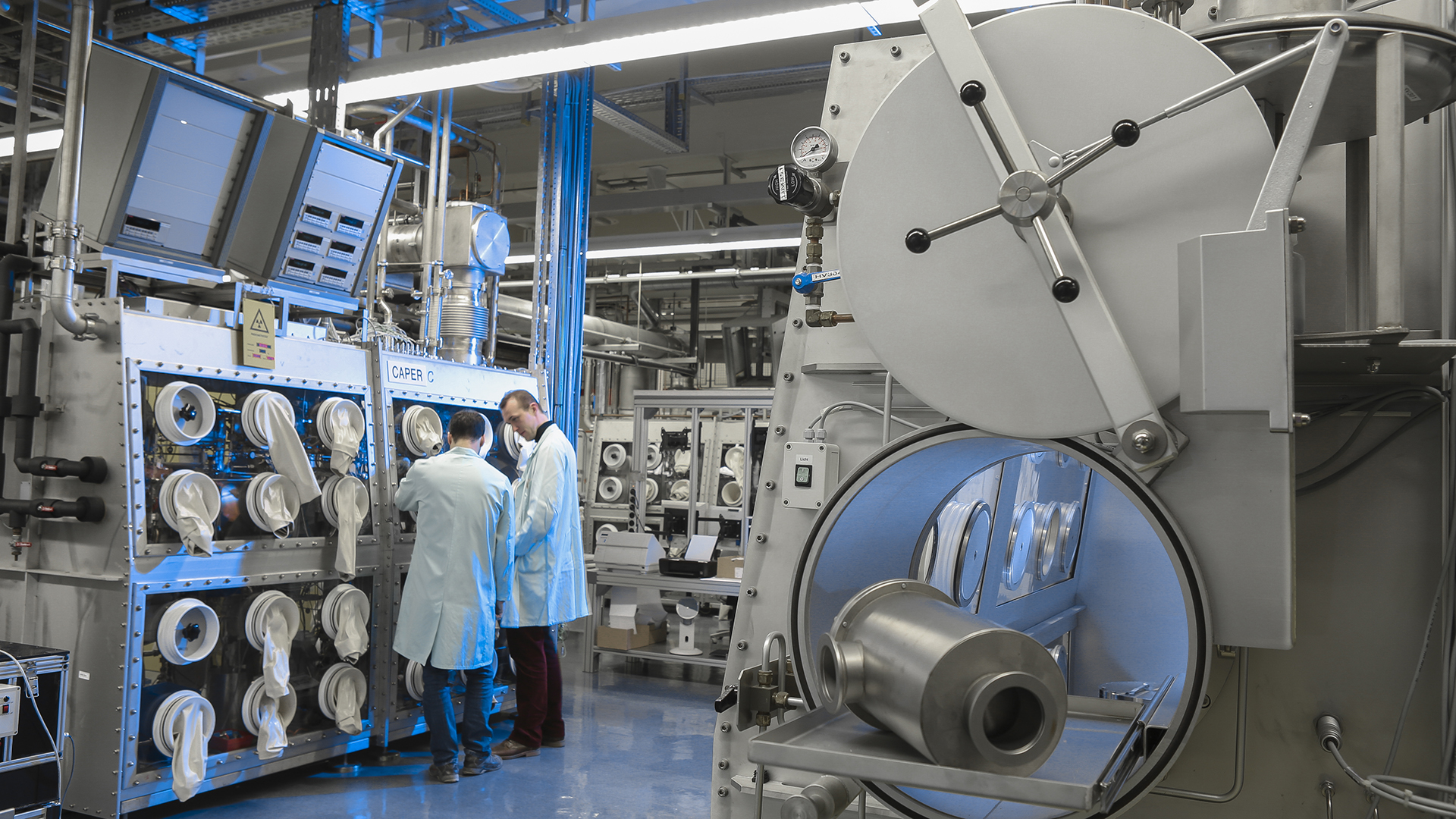
Facilities that handle tritium employ multiple layers of safety. These include robust ventilation systems, specialized containment gloveboxes, and continuous air monitoring. Workers wear personal protective equipment. Waste management is also critical. Tritium waste is typically stored in secure containers until its radioactivity decays to safe levels. The relatively short half-life of tritium (12.32 years) means that its radioactivity diminishes significantly over a few decades.
Environmental monitoring around tritium facilities is routine. Scientists regularly sample air, water, and soil to ensure that tritium releases remain well below regulatory limits. These measures ensure both worker safety and environmental protection.
Future of Tritium Technologies
The demand for tritium is likely to increase, especially with the advancement of fusion energy research. Scientists are exploring more efficient and cost-effective ways to produce tritium. This includes investigating new materials for tritium breeding blankets in fusion reactors and optimizing current production methods.
Research also continues into new applications for tritium. For example, advancements in self-luminous technology could lead to even brighter and longer-lasting illumination devices. In the medical field, ongoing studies explore the potential of tritium in targeted radiation therapies, where its localized energy deposition could be beneficial.
Tritium technologies are a fascinating and important field. From providing essential safety illumination to powering future energy solutions, tritium’s unique properties continue to drive innovation and contribute to scientific progress. Its careful handling and responsible use remain central to unlocking its full potential.